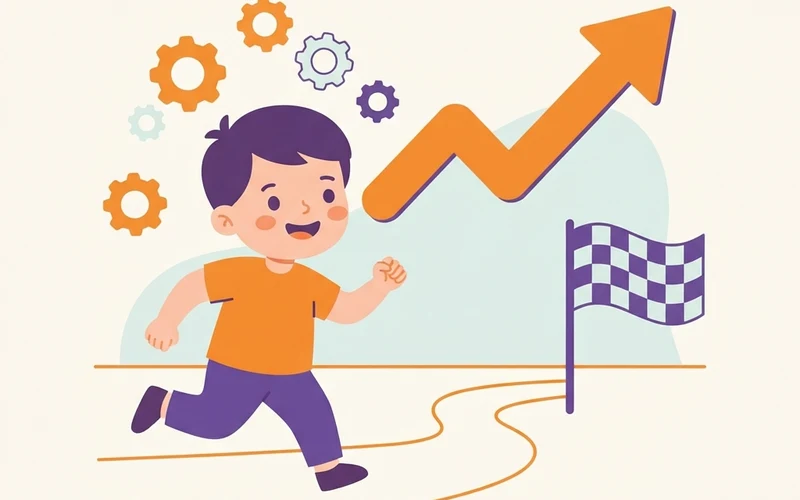
"Slow" is usually inefficient processing, not inability, and both processing speed and working memory are trainable skills, not fixed traits.
"My child is just slow" is a phrase we hear often, usually said with real worry and often with a hint of guilt for even thinking it. Before accepting that label, it's worth separating two very different things: genuine learning difficulty, and undertrained cognitive skills that look similar on the surface but respond very differently to help.
"Slow" often means "inefficient," not "unable"
A child taking much longer than classmates to grasp or recall material isn't necessarily incapable. They may simply be using a less efficient mental process to get there, one that takes more steps or more repetition to reach the same result. With a better process, the same child can close the gap significantly, sometimes faster than parents expect.
Where the inefficiency usually comes from
Most commonly: slower information processing speed, weaker working memory (the ability to hold multiple pieces of information in mind at once), or an untrained approach to encoding new material in the first place. None of these are permanent traits carved in stone. They're skills, and like any skill, they respond to targeted, repeated practice.
Why comparison to classmates isn't always fair
Children develop these cognitive skills at different rates, in the same way they hit physical milestones at different ages. A child who seems behind at age 8 can be entirely caught up by age 10 with the right structured input. The gap isn't necessarily about ability, and it's rarely as permanent as it feels in the middle of a difficult school term.
What actually helps
Rather than more repetition of the same subject content, which a struggling child has often already had plenty of, what usually helps most is directly training the underlying processing speed and memory skills. This is the focus of #memohack™'s four training areas: brain speed, energy, connectivity, and stamina, worked on directly rather than hoped for as a side effect of more homework.
If you're seeing this pattern in your child, a trial class is a low-pressure way to see what's actually going on.