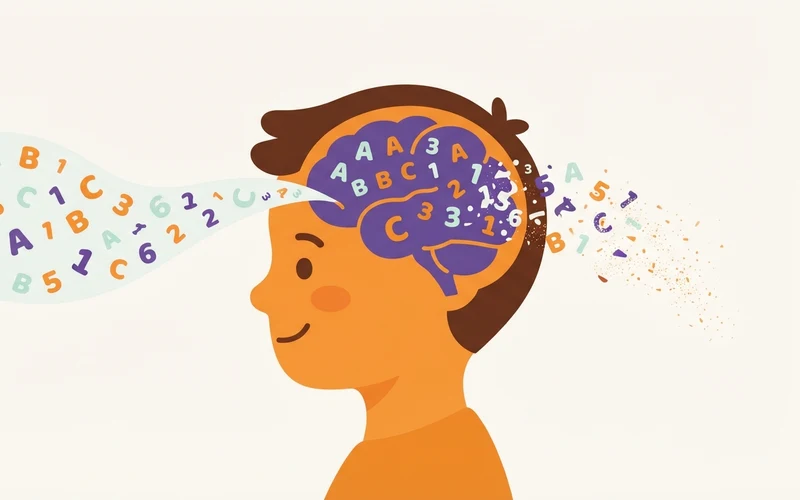
Information that's only re-read, not actively recalled or turned into a mental image, rarely makes it into long-term memory. That's why it feels understood in class but forgotten a week later.
It's one of the most frustrating patterns for parents: your child studies a topic, seems to get it, answers your questions correctly that evening, and a week later, it's like they never saw it before. This is a memory encoding problem, and it's extremely common, especially in subjects with a lot of standalone facts to hold onto.
Short-term vs long-term memory
Information first lands in short-term memory, which holds it for seconds to hours before it's either discarded or moved onward. Whether it moves into long-term memory, where it can be recalled weeks or months later, in an exam hall, under pressure, depends on how it was encoded in the first place, not just how many times it was read.
Why re-reading doesn't move information into long-term storage
Passive review, such as re-reading notes or highlighting sentences, creates a feeling of familiarity without building a strong retrieval path. That's why children can "recognise" material as familiar when they see it again, yet fail to recall it unprompted in an exam where no cues are given.
The role of visual encoding
The brain is dramatically better at remembering vivid images than abstract text or numbers. This is well established in memory research and is the entire premise of "memory palace" and similar techniques used by memory champions. Converting information into mental pictures, the basis of photographic memory technique, creates a far stronger, longer-lasting memory trace than any amount of re-reading could.
How #memohack™ addresses this directly
Rather than telling children to "study harder," our program trains the specific skill of converting information into memorable mental images, plus the recall practice needed to make that skill automatic under exam conditions rather than something they have to consciously think to do. With enough repetition, image-based encoding becomes the child's default way of taking in new information, not just a trick for exam week.
If this pattern sounds familiar, book a trial class and see the technique in action.